Research & Academic Exchange
Taiwan–Korea TAME Webinar Symposium: From Frozen Shoulder and Jumper’s Knee to Randomized Trial Evidence
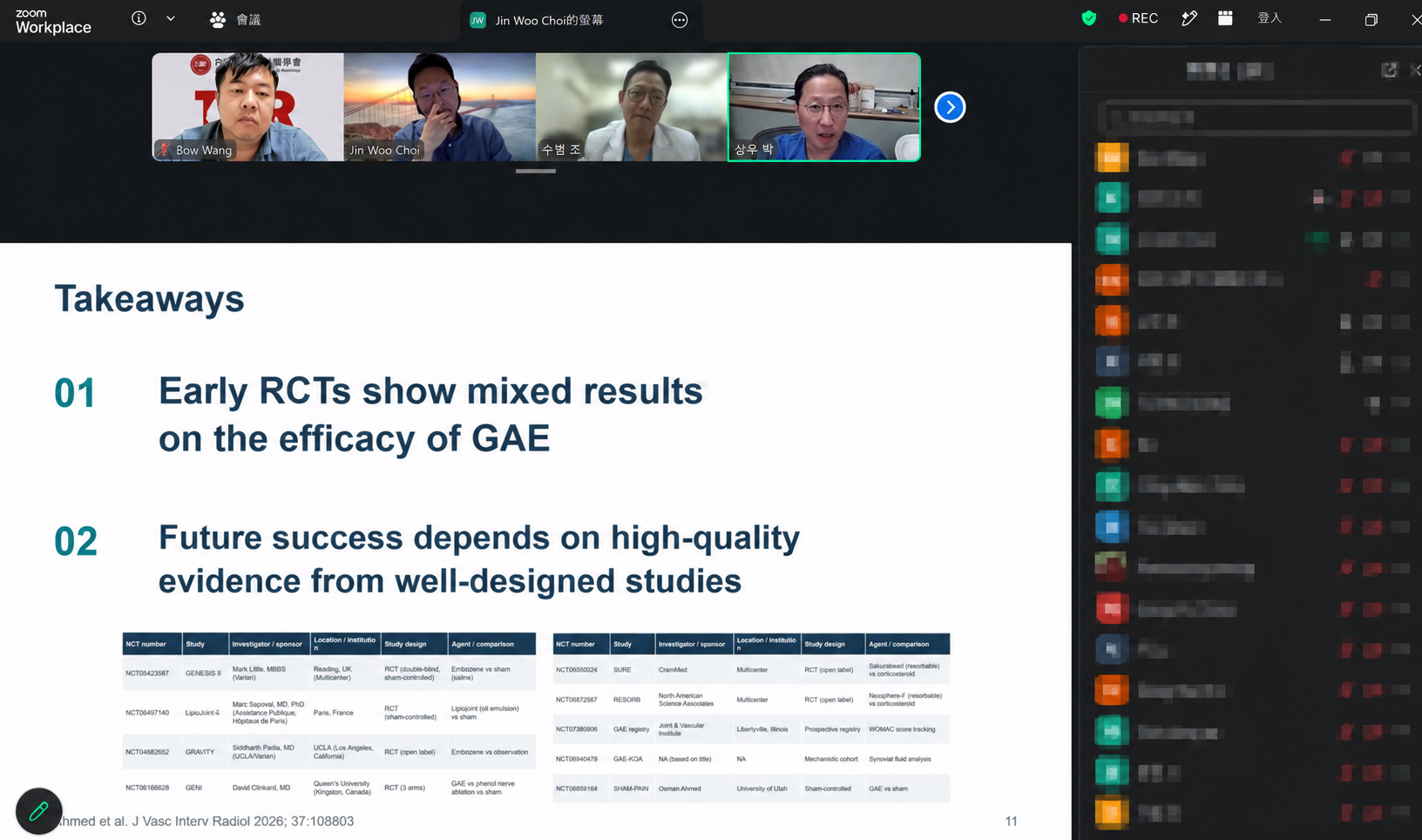
On November 19, 2026, I joined a Taiwan–Korea webinar organized by the TAME Study Group of the Korean Society of Interventional Radiology (KSIR) to discuss transarterial musculoskeletal embolization (TAME) for refractory frozen shoulder.
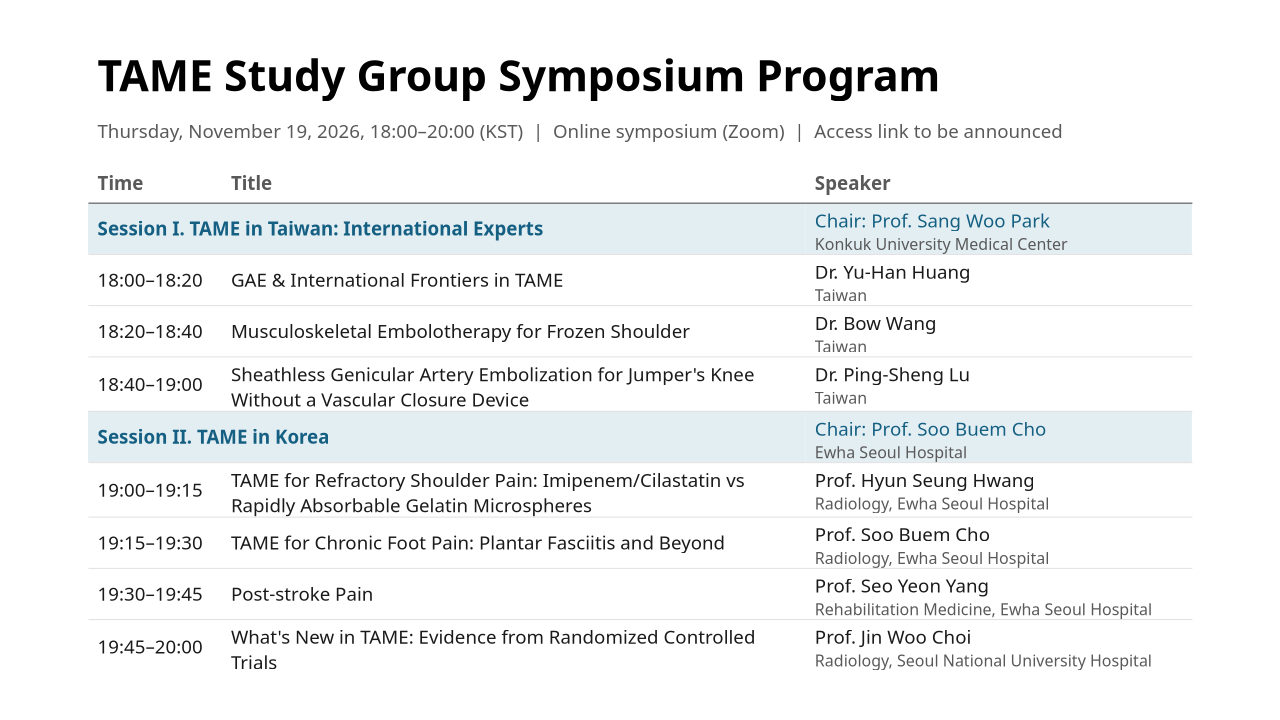
The symposium was co-chaired by Prof. Sang Woo Park of Konkuk University Medical Center and Prof. Soo Buem Cho of Ewha Seoul Hospital. Speakers from Taiwan and Korea covered genicular artery embolization, frozen shoulder, jumper’s knee, chronic foot pain, post-stroke pain, and the emerging randomized-trial evidence for TAME and GAE.
The program reflected an important transition in musculoskeletal embolization: beyond exploring new indications, the field increasingly needs rigorous comparative studies and randomized trials to identify which patients are most likely to benefit.
Taiwan session: International progress and clinical applications
The first session was chaired by Prof. Sang Woo Park and featured three speakers from Taiwan.
Dr. Yu-Han Huang: GAE and international frontiers in TAME
Dr. Yu-Han Huang presented GAE & International Frontiers in TAME, offering a broad view of the international development and current clinical position of genicular artery embolization (GAE) and transarterial musculoskeletal embolization.
Dr. Bow Wang: TAME for refractory frozen shoulder
My talk, Musculoskeletal Embolotherapy for Frozen Shoulder, covered the pathophysiology and imaging assessment of adhesive capsulitis, abnormal neovascularity, and the rationale for targeting pain-associated abnormal vascularity with TAME.
I also presented our 2026 retrospective head-to-head study comparing TAME with arthroscopic capsular release (ACR) for refractory adhesive capsulitis.
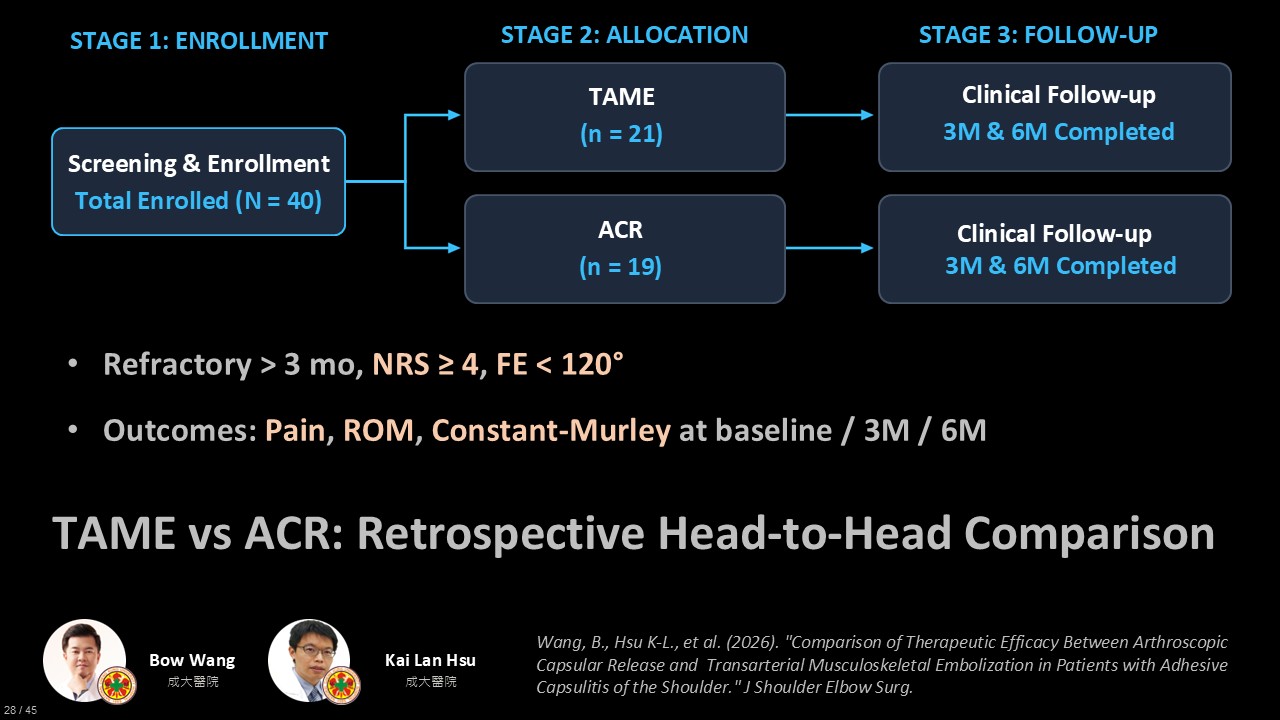
The study included patients with symptoms lasting more than 3 months, an NRS pain score of at least 4, and anterior forward elevation below 120 degrees. Forty patients completed follow-up: 21 in the TAME group and 19 in the ACR group.
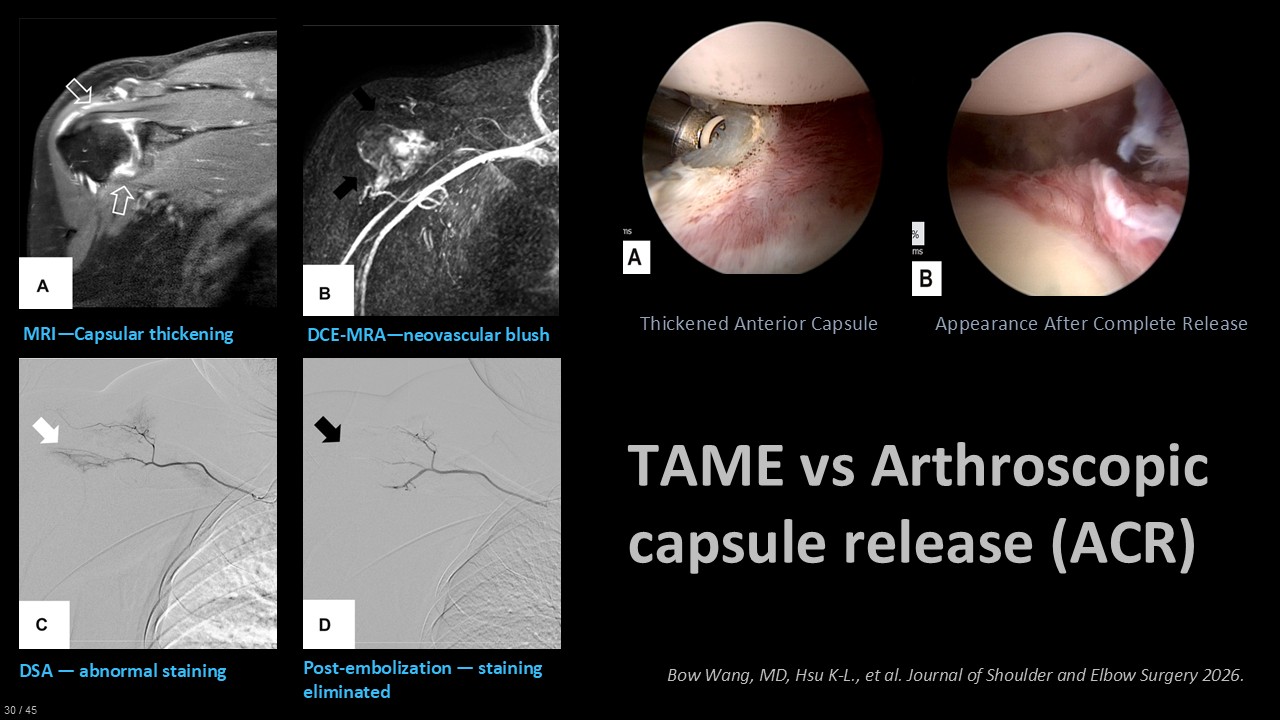
TAME and ACR approach the disease differently. TAME uses angiography to identify abnormal vascular staining that corresponds to the symptomatic region and treats it selectively. ACR directly releases the thickened, contracted capsule through arthroscopy.
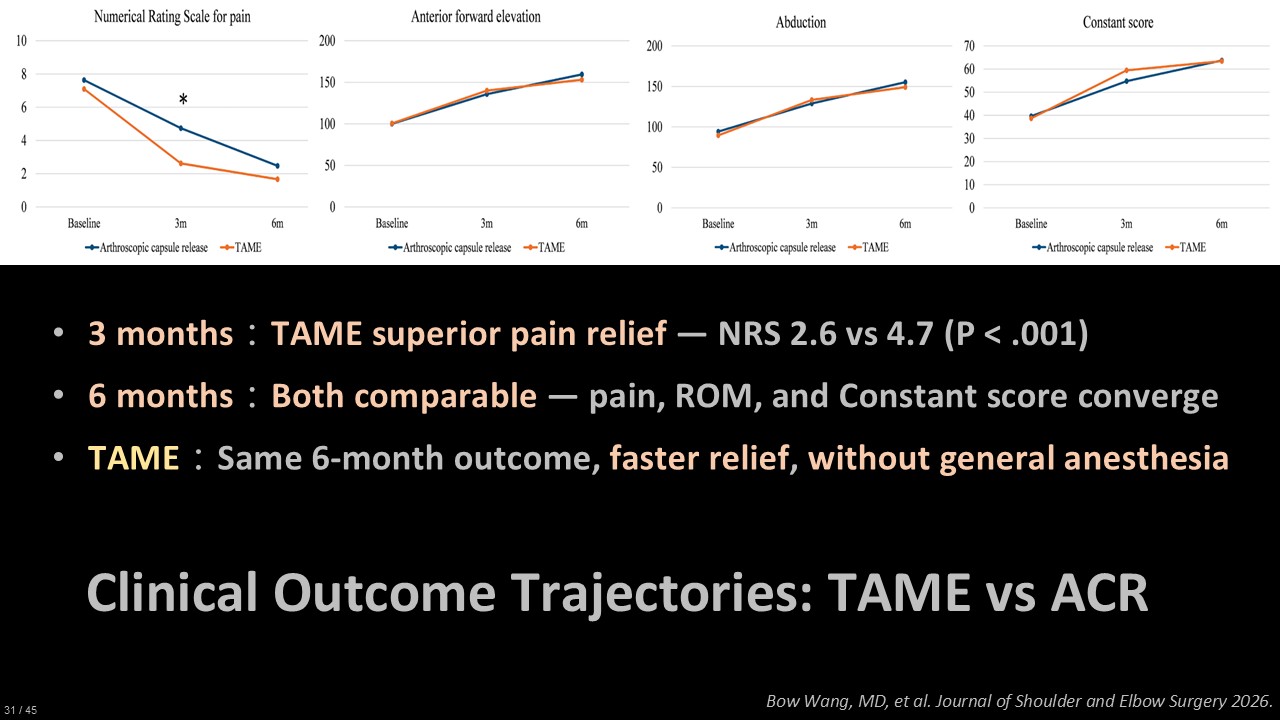
At 3 months, the TAME group had a significantly lower mean pain NRS than the ACR group: 2.6 versus 4.7 (P < .001). By 6 months, the two groups showed no significant differences in pain, shoulder range of motion, or Constant score.
Because this was a retrospective study, prospective studies and randomized trials are still needed. Within this cohort, however, TAME was associated with earlier pain relief and earlier attainment of clinically meaningful improvements.
Dr. Ping-Sheng Lu: Sheathless embolization for jumper’s knee
Dr. Ping-Sheng Lu presented Sheathless Genicular Artery Embolization for Jumper’s Knee Without a Vascular Closure Device, sharing a streamlined, minimally invasive approach to embolization for patellar tendinopathy without a vascular sheath or closure device.
Korea session: From shoulder and foot pain to post-stroke pain
The second session was chaired by Prof. Soo Buem Cho and approached TAME through embolic materials, different pain disorders, and randomized-trial evidence.
Prof. Hyun Seung Hwang
TAME for Refractory Shoulder Pain: Imipenem/Cilastatin vs Rapidly Absorbable Gelatin Microspheres compared the clinical use and treatment considerations of two embolic approaches for refractory shoulder pain.
Prof. Soo Buem Cho
TAME for Chronic Foot Pain: Plantar Fasciitis and Beyond explored plantar fasciitis and the potential application of TAME to other chronic foot-pain conditions.
Prof. Seo Yeon Yang
Post-stroke Pain extended the discussion beyond musculoskeletal disease and brought radiology and rehabilitation medicine perspectives together in the assessment and treatment of chronic pain after stroke.
Prof. Jin Woo Choi
Prof. Jin Woo Choi of Seoul National University Hospital concluded the program with What’s New in TAME: Evidence from Randomized Controlled Trials. He reviewed the evolving randomized-trial evidence for GAE and TAME, noting that early trial results remain mixed. High-quality, well-designed studies with appropriate control groups will be essential for defining efficacy and indications.
Moving from technical exchange toward higher-quality evidence
The symposium covered the knee, shoulder, patellar tendon, plantar fascia, and post-stroke pain while also addressing embolic materials, simplified procedural approaches, comparative research, and randomized trials.
The field can no longer stop at asking whether TAME can be performed. The next questions are which patients should be considered, how target arteries and embolic materials should be selected, and whether benefit can be demonstrated in rigorous controlled studies.
My thanks to the KSIR TAME Study Group, Prof. Sang Woo Park, and Prof. Soo Buem Cho for organizing and chairing the symposium, and to Dr. Yu-Han Huang, Dr. Ping-Sheng Lu, and all Korean speakers for sharing their experience and research.
Continued academic exchange between Taiwan and Korea can help us share not only techniques, but also build a more complete and reliable evidence base for musculoskeletal embolization.
This page is for medical education and academic communication. It does not replace individual diagnosis or treatment advice.
Continue reading this category →