Research & Academic Exchange
From Pathological Angiogenesis to Pain Treatment: Moderating Dr. Yuji Okuno’s TAME Lecture
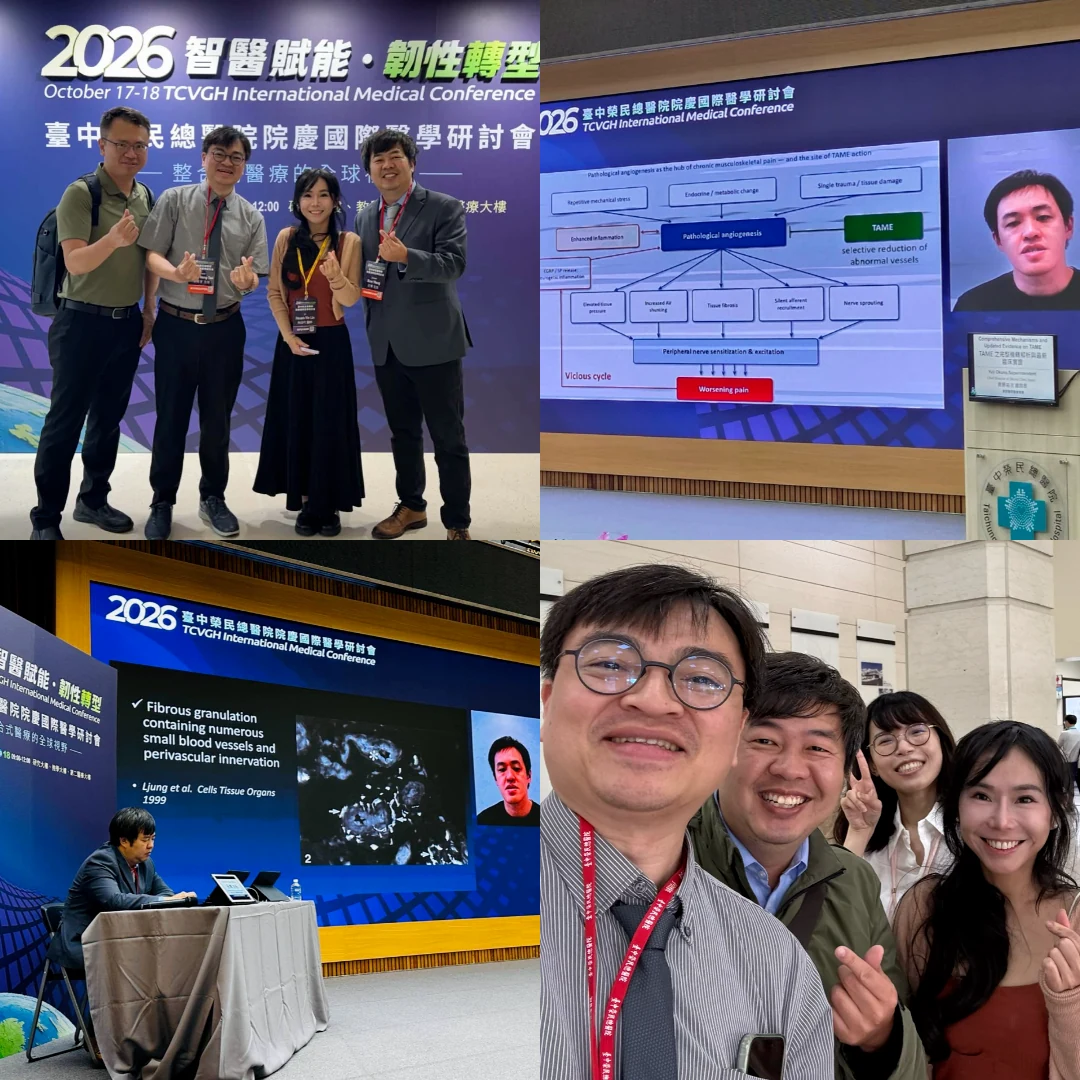
On October 18, 2026, I attended the 44th Anniversary International Medical Conference of Taichung Veterans General Hospital. During the Department of Radiology’s Pain Treatment Summit—From Multidisciplinary Integration to Precision Intervention—I served as moderator for the lecture by Dr. Yuji Okuno of Japan.
I sincerely thank Dr. Hsuan-Yin Lin and Department Director Wen-Hsien Chen for the invitation and the opportunity to participate in this multidisciplinary meeting integrating pain mechanisms, imaging assessment, and interventional treatment.
Dr. Yuji Okuno: Comprehensive Mechanisms and Updated Evidence on TAME
Dr. Yuji Okuno is a leading pioneer in applying transarterial microembolization to chronic musculoskeletal pain.
In 2023, he received the CIRSE Award of Excellence and Innovation in Interventional Radiology, recognizing his pioneering work in transarterial embolization for chronic musculoskeletal inflammation and pain. In 2025, he was invited to deliver the CIRSE Josef Rösch Lecture, sharing the development, mechanisms, and clinical applications of TAME.
Beginning with pathological angiogenesis, Dr. Okuno explained that chronic musculoskeletal pain may involve more than local tissue injury. Contributing processes may include:
- Inflammatory-cell infiltration
- Nerve sprouting and neoinnervation
- Tissue fibrosis
- Edema, effusion, and increased tissue pressure
- Abnormal arteriovenous communications
- Peripheral nerve sensitization and worsening pain
These changes may interact and create a cycle of pathological angiogenesis, chronic inflammation, and persistent or progressive pain.
The therapeutic concept of TAME is not to eliminate all local blood flow. Instead, selective angiography is used to identify abnormal vascularity that corresponds to the painful lesion, followed by an appropriate strategy to reduce these abnormal vascular signals while preserving the blood supply required by normal tissues.
From Multidisciplinary Integration to Precision Intervention
The summit also featured experts from several fields:
Dr. Yuji Okuno“Comprehensive Mechanisms and Updated Evidence on TAME”
Dr. Wei-Hung Chen (陳威宏)“The Logic of Neurolysis: Treatment Strategies for Refractory Cancer Pain from Visceral to Somatic Nerves”
Dr. Chen-Yu Hung (洪辰宇)“Ultrasound Evaluation of Acute Ankle Sprain: A Clinician’s Perspective”
Dr. Yung Hsu (徐庸)“Mechanism-Directed Precision Intervention for Painful Bone Marrow Edema”
Dr. Hsuan-Yin Lin (林炫吟)“Breakthroughs and Innovations in Microembolization: New Embolic Materials, Emerging Technologies, and the TCVGH Experience”
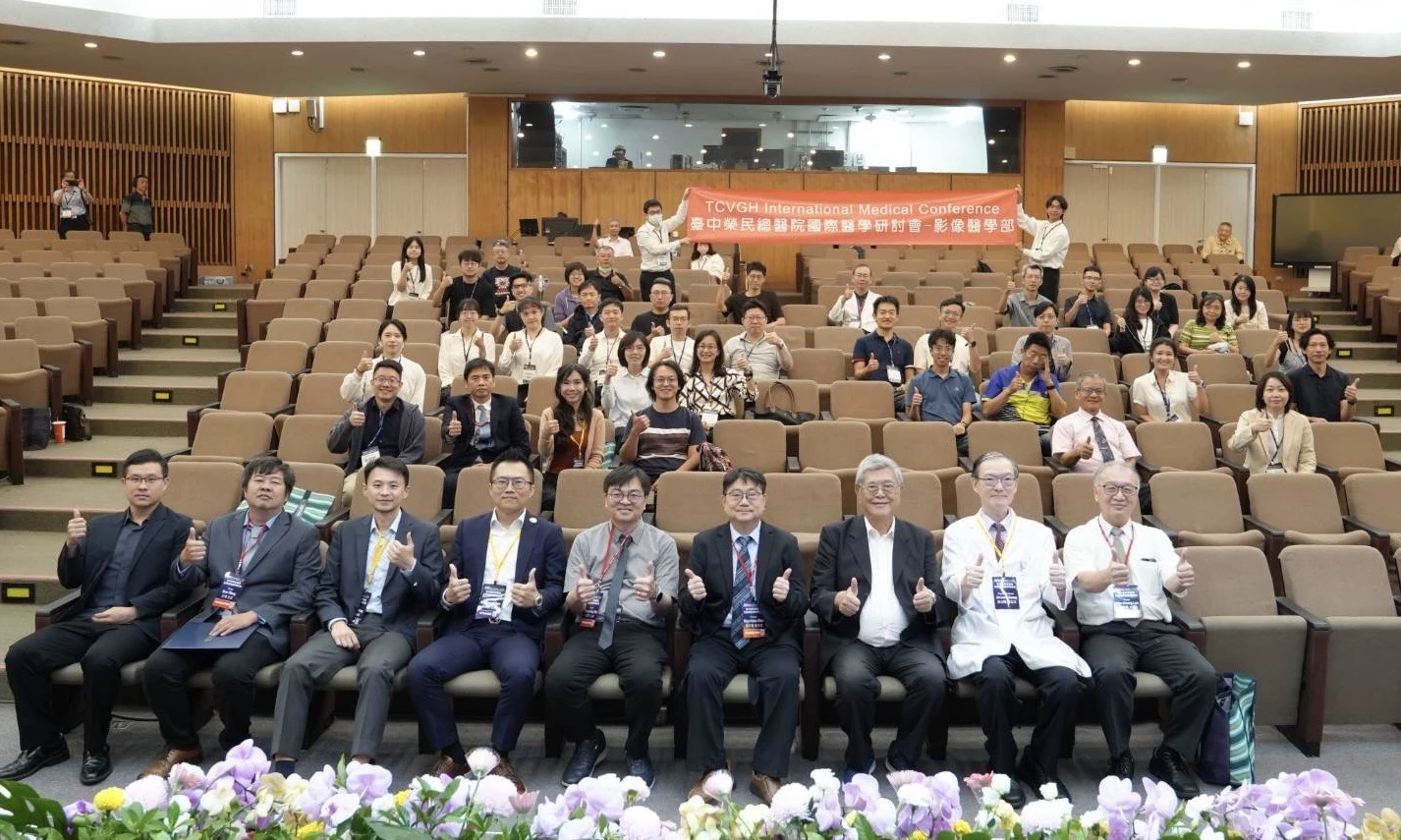
From cancer pain, sports injury, and bone marrow edema to musculoskeletal embolization, the diseases and techniques differed, but the shared direction was clear: understand the pain mechanism, identify the true pain generator, and then choose an appropriate treatment.
TAME Is More Than “Blocking a Vessel”
As the clinical use of TAME continues to develop, the central question is no longer simply whether the procedure can be performed. We must also ask:
- Which patients are appropriate candidates?
- What role does abnormal vascularity play in different diseases?
- How can pain-related vessels be distinguished from the normal tissue blood supply?
- How should embolic materials be selected while minimizing the risk of nontarget embolization?
- How far can the current evidence support clinical use?
Moderating this lecture also gave me an opportunity to reconsider and organize my current clinical and research directions.
For a new treatment to become part of responsible clinical practice, technical innovation alone is not enough. Clearer patient selection, more complete safety assessment, and higher-quality evidence are equally essential.
Reference
This page is for medical education and academic communication. It does not replace individual diagnosis or treatment advice.
Continue reading this category →