Research & Academic Exchange
Reflections on Building a Digital Moat in the AI Era: From the White Coat Life Academy to bowwang.com
I originally joined this course to see how AI might help me organize a website and publish articles more efficiently. By the end of the day, however, I left with a more fundamental question: how can the knowledge accumulated through years of medical practice be organized, discovered, and preserved in the AI era?
The White Coat Life Academy’s small-group course, “Building a Digital Moat in the AI Era,” helped me connect several projects I had been pursuing separately—medical expertise, content organization, website architecture, and bilingual knowledge sharing—into a clearer long-term direction.
Dr. Chen Yu-Chieh’s lecture changed how I understand a digital moat
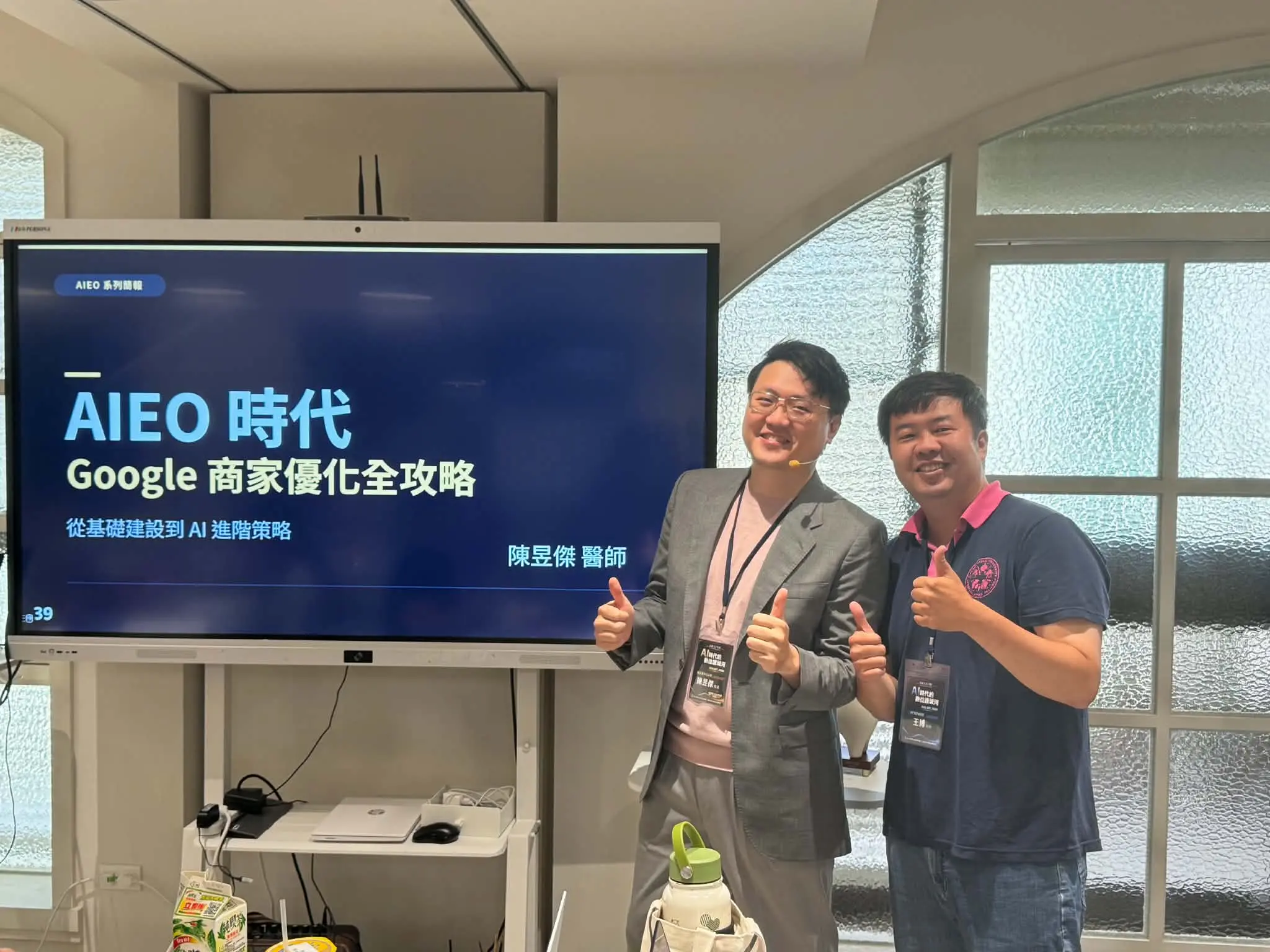
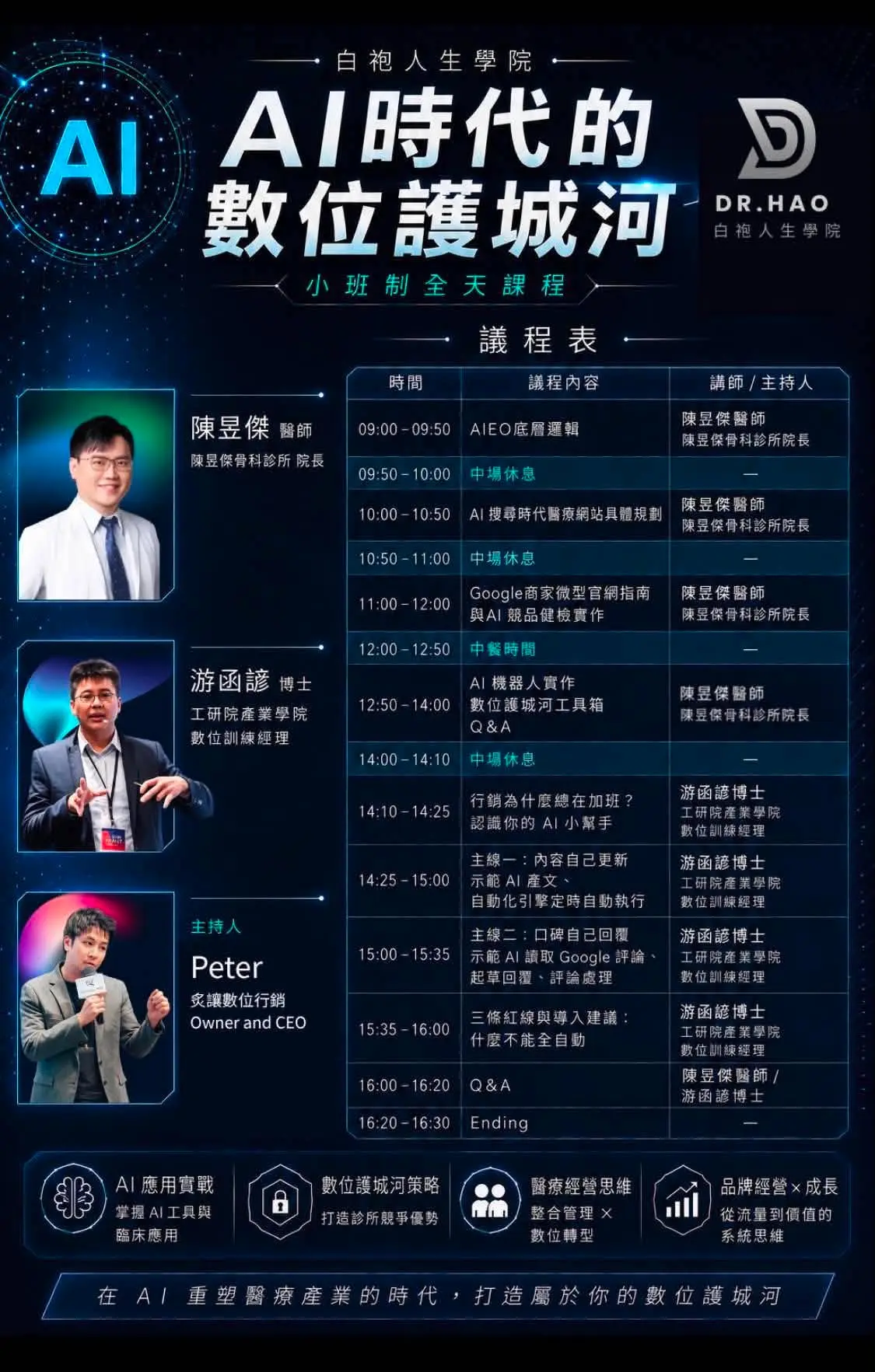
Dr. Chen Yu-Chieh (陳昱傑) delivered the main lecture, with the program hosted by 炙讓數位行銷. He connected the foundations of AIEO and medical website planning in the era of AI search with the creation of a Google Business Profile, the organization of its core information, ongoing content management, and later optimization. What impressed me most was that sustainable value does not come from learning one more tool; it comes from building clear, trustworthy, and continuously updated professional content.
What stayed with me most was the realization that tools will keep changing, and search rules will change with them. The part that cannot be copied quickly is the professional content built from clinical experience, research, and teaching. That is what a meaningful digital moat looks like to me.
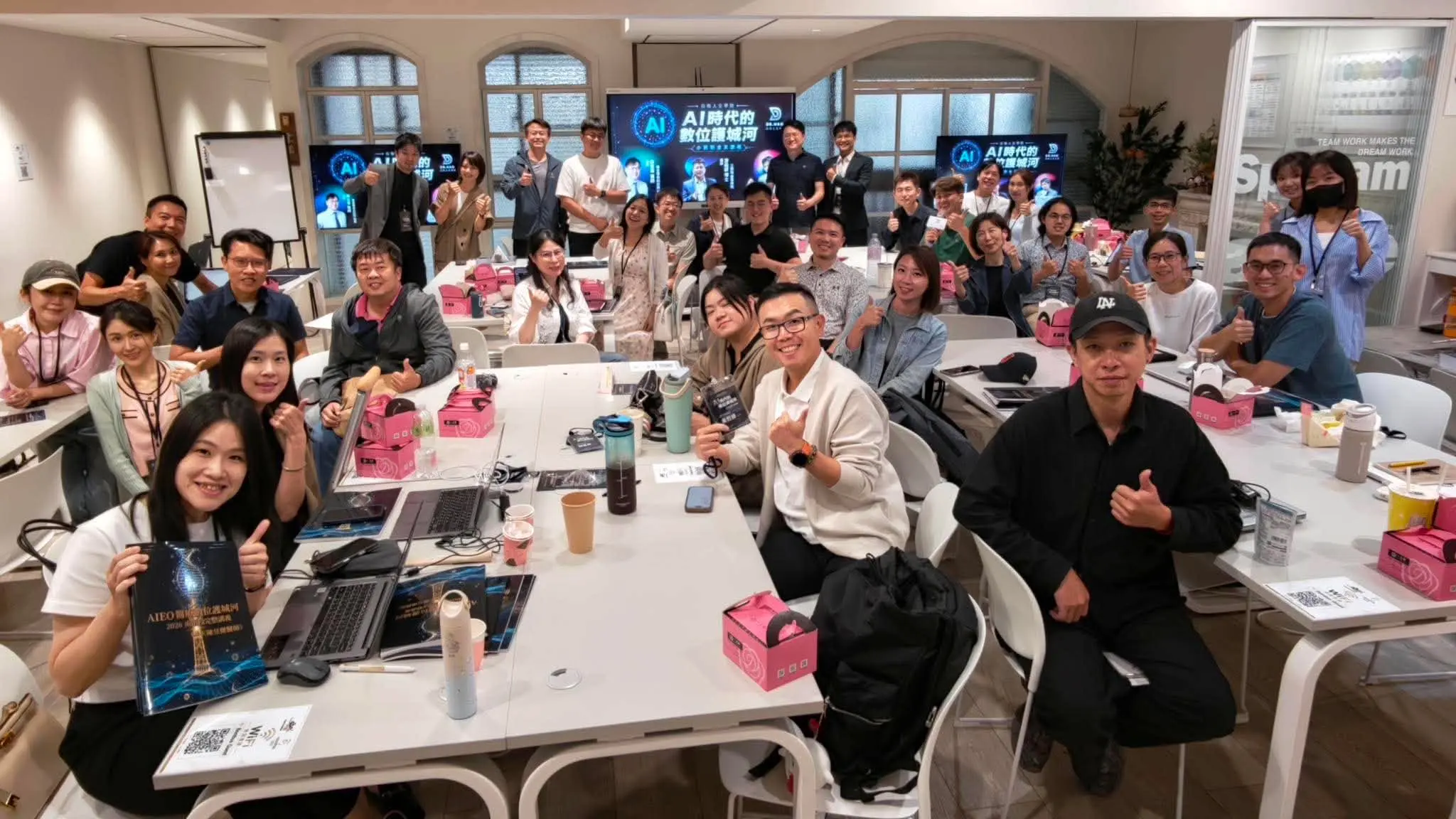
I was especially glad to meet Dr. Lian during the course, and we spoke at length. Our conversation ranged from clinical experience and professional content to how physicians can continue organizing and sharing knowledge. I learned a great deal from the exchange. Readers can also visit Dr. Lian Szu-Han’s official website to learn more about her work.
Five field manuals and one quick-reference card
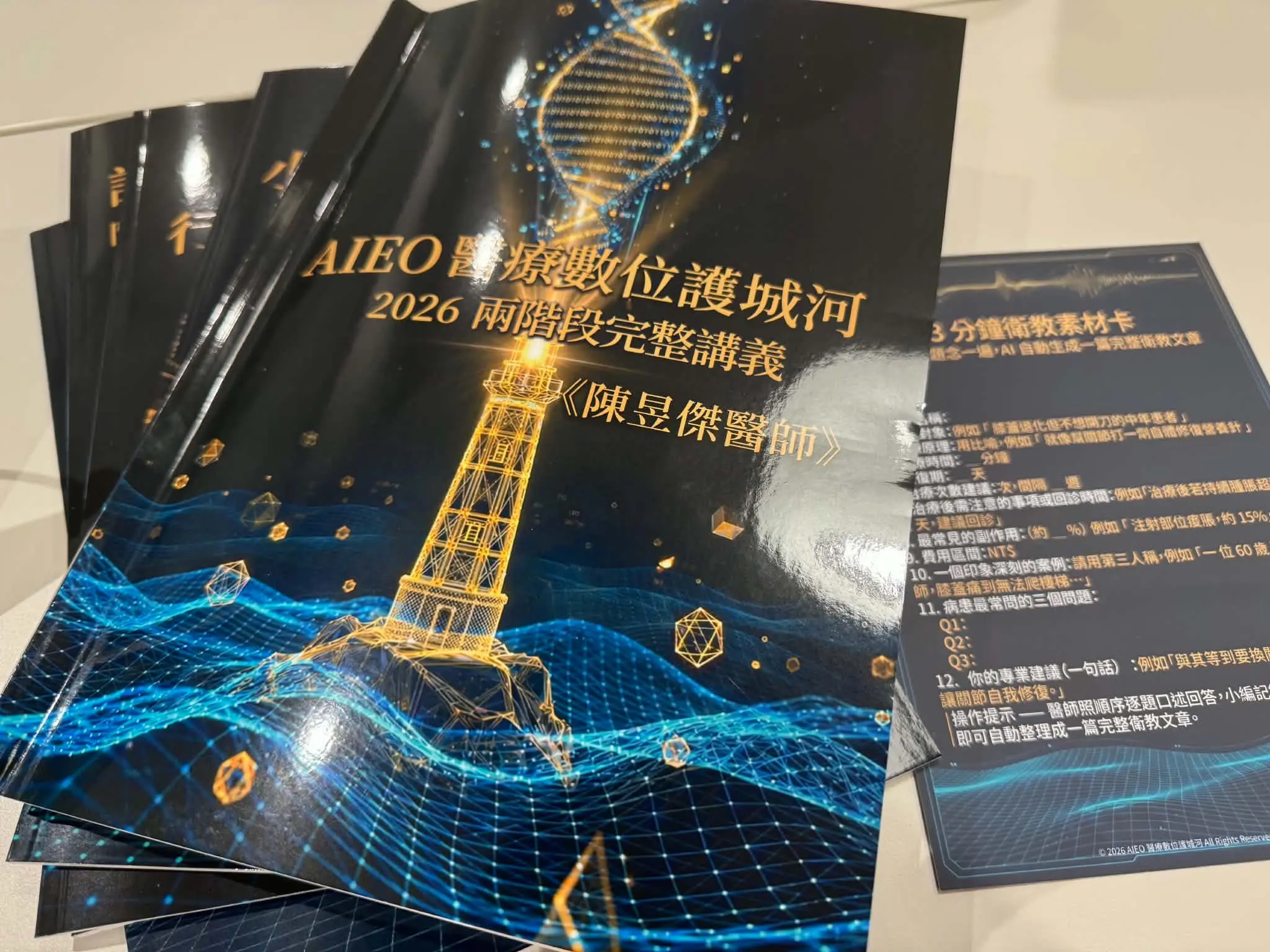
Dr. Chen Yu-Chieh organized the course material into five practical field manuals and also prepared one separate quick-reference card. The five manuals address different roles and operational needs:
- Executive operations strategy: overall positioning, priorities, and long-term growth.
- Administrative acceptance and quality review: clear standards for checking deliverables and tracking results.
- Editorial content operations: a repeatable process for planning, producing, and publishing content.
- Vendor specification brief: clearer requirements, specifications, and deliverables for external partners.
- Complete two-stage handout: a collaborative-notes version of the full lecture, organized into two stages for review and implementation after the course.
The separate “Three-minute patient-education content card” is the quick-reference card, not one of the five manuals. It provides a concise way to turn diseases, treatments, and clinical points into understandable educational material. I appreciated this design because understanding an idea in the classroom is easy; turning it into something that still works after returning home is the difficult—and valuable—part. In the afternoon, Dr. You Han-Yen (游函諺) briefly guided the group through several AI tools and their basic workflows.
The most satisfying outcome was completing my website architecture
The course arrived just as I completed the overall structure of my professional website, bowwang.com. My original Blogger site contains years of accumulated material, but its categories, search, clinical topics, and bilingual presentation remained fragmented. I have therefore decided to stop updating Blogger and preserve it as a historical archive, while publishing new work through the dedicated website.
This is more than a change of address. The new site will continue to focus on two main areas: the literature on TAME/GAE and transarterial microembolization for musculoskeletal pain, and educational articles on musculoskeletal imaging and image-guided pain intervention. When the categories, article search, clinical expertise pages, and academic profile finally came together in one structure, the scattered material began to feel like a knowledge library that could keep growing.
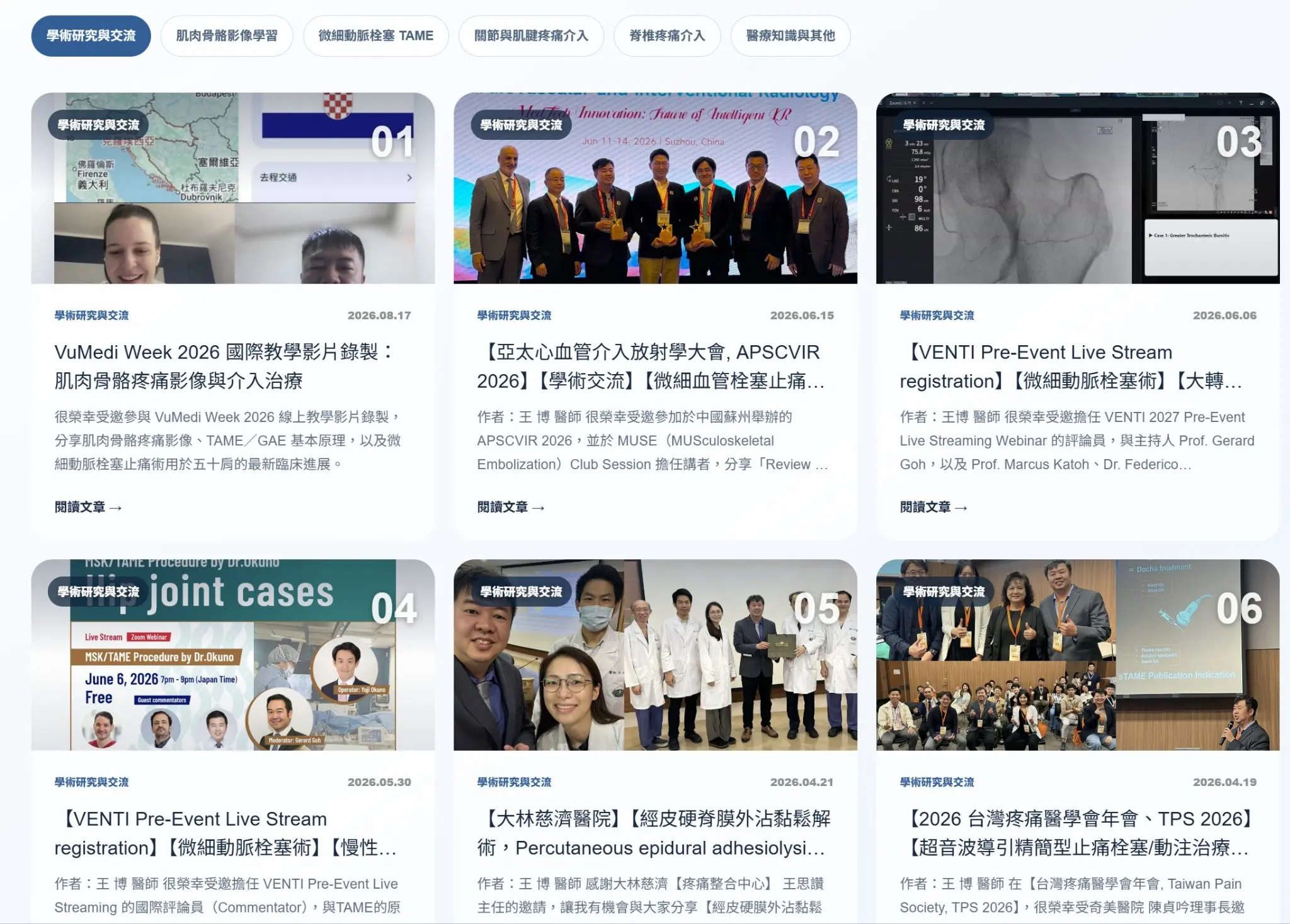
The website also provides one-click switching between Traditional Chinese and English. This mattered to me because TAME, musculoskeletal imaging, and interventional pain care are inherently international fields. The English version is not limited to translated navigation: reviewed English articles have their own URLs, categories, and search function for international colleagues and research collaborators.
Seeing the physical “body” behind AI
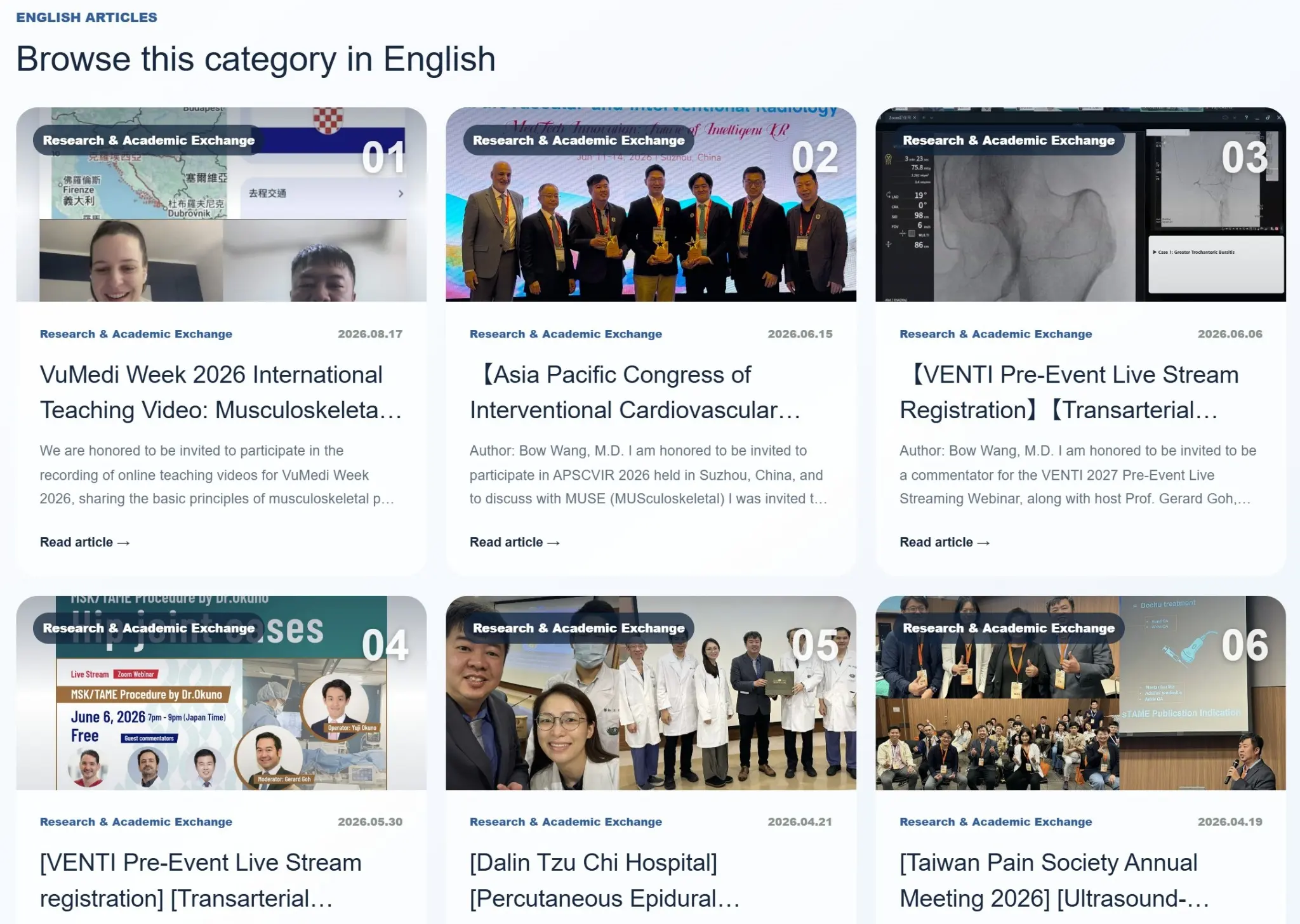
The course venue was provided by 邦鉑科技. Its owner, Lulu, also introduced us to a working AI data center. Seeing computing hardware valued at more than NT$60 million was far more striking than hearing abstract references to “the cloud” or “AI computing power” in a presentation.
Standing beside the server racks made something obvious: every model, generated answer, and data workflow depends on physical facilities, networking, cooling, and ongoing operations. AI may feel instantaneous on a screen, but it has an expensive and very tangible body behind it.
I left with a long-term method, not a shortcut
Dr. Chen Yu-Chieh did more than discuss Google Business Profile optimization in the AIEO era. He began with how to create a profile, organize its essential information, prepare the content for the business page, and maintain it over time. This made me reconsider the relationship between a professional website and a Google Business Profile: they should reinforce each other so that accurate, traceable, and continuously updated information can be discovered by the people who genuinely need it.
After this course, I am even more certain that AI should not replace professional judgment. I want it to serve as an assistant for organizing knowledge and improving bilingual publishing workflows. Completing the website is not the finish line; it is more like building the bookshelves. The next task is to place TAME literature, musculoskeletal imaging education, and clinical experience onto those shelves, one carefully reviewed article at a time.
My question has therefore shifted from “What else can I do with AI?” to “What knowledge is worth preserving and building over time?” That will be the direction behind the next phase of bowwang.com.
This page is for medical education and academic communication. It does not replace individual diagnosis or treatment advice.
Continue reading this category →