Research & Academic Exchange
[European Congress of Radiology, ECR 2025] [Academic Exchange] [Learning on the Interpretation of Spinal Joint, Tendon, and Ligament Imaging] 2025-2-26/3-2
![[European Congress of Radiology, ECR 2025] [Academic Exchange] [Learning on the Interpretation of Spinal Joint, Tendon, and Ligament Imaging] 2025-2-26/3-2 — related image 1](https://blogger.googleusercontent.com/img/b/R29vZ2xl/AVvXsEgDc-kSu_87gfM-RQ-BXJ7rfMPb_cTz-BOjKVRc5uJfsVQh8C19LrI25Kt3g2ERXQaMbtYZLi4HM9R5XvWNqTR2ptdxyYQ83uJt53ZEQDwnVCET2dqzr1UDoBnFZ0R72nDEqY4LewqO60A0FkvzrrYwyiDsTX5i45cEQhMTbNzosFRH42u19nBtok7_yrZO/s1176/%E6%8A%95%E5%BD%B1%E7%89%871.JPG)
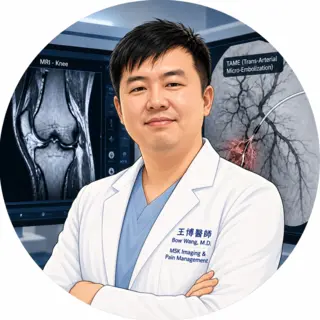
Author: Bow Wang, M.D.
The European Society of Radiology (ECR 2025) Annual Meeting was held in Vienna, Austria, from February 26 to March 2 this year. The annual ECR scientific meeting attracts experts and scholars from the field of radiology around the world. In addition to reporting on research related to [Transarterial Microembolization (TAME)], Bow Wang, M.D. also learned from European and American radiology experts about various medical image interpretations related to spinal joints, tendons, and ligaments, as well as the new [image-guided minimally invasive interventional pain treatment].
![[European Congress of Radiology, ECR 2025] [Academic Exchange] [Learning on the Interpretation of Spinal Joint, Tendon, and Ligament Imaging] 2025-2-26/3-2 — related image 2](https://blogger.googleusercontent.com/img/b/R29vZ2xl/AVvXsEgdULtndgL7z88-Eh-2B3UMgxymohwXRR3xssC9jqqQOfHQCkD83MNdGbP44vSccA_4JolivcgJn7njxwC5NQ2yWIMT-SmSxKLgCgxRBLBorI55ocdl1DzWjzZv6Na6AacY4QYDExwKzle8dhD2h0zTr1jIxVnBt84aRx0D2cQWx7q6Vv591MrGJldYygmT/s1168/%E6%8A%95%E5%BD%B1%E7%89%872.JPG)
Listen to a lecture and take photos with Dr. Martinoli, an internationally renowned Italian expert on musculoskeletal and ultrasound.
![[European Congress of Radiology, ECR 2025] [Academic Exchange] [Learning on the Interpretation of Spinal Joint, Tendon, and Ligament Imaging] 2025-2-26/3-2 — related image 3](https://blogger.googleusercontent.com/img/b/R29vZ2xl/AVvXsEhSoQzGsrOanHr6pWO98eUvFOjOiMv81Y1WQhHZyhpqxtabVLtA7FbwCuSpTm_iSlI-T0unvfM1YZH1p7ONHqgHDtWom09iIuqxk4n1y9q7m6eTLVjYadpsQyj-C0SKZp4Ri9SNKwQqwWM6uNfeTQZE0BkSdYg3d7EFqbsEMYiDJyMBdP5fKI13NRVon_9n/s1055/%E6%8A%95%E5%BD%B1%E7%89%873.JPG)
Listen to research and treatment of osteoarthritis of the fingers using ultrasound injections.
Besides minimally invasive interventional therapies and other interventional techniques, another important task for radiologists is the interpretation of images, including those from ultrasound, X-rays, computed tomography (CT), and magnetic resonance imaging (MRI). Therefore, in the United States, the distinction between interventional radiologists and diagnostic radiologists is quite clear.
The following is an introduction to both from ChatGPT:
The main difference between an Interventional Radiologist and a Diagnostic Radiologist lies in their job duties and areas of expertise.
Interventional Radiologists:
Interventional radiologists focus on using imaging techniques (such as X-rays, CT scans, and MRI) to perform minimally invasive surgical and therapeutic procedures. They frequently perform various interventional procedures, such as angiography, catheter placement, tissue biopsies, and tumor embolization and ablation. Their work extends beyond diagnosis to include direct therapeutic interventions.
[Diagnostic Radiologist]:
Diagnostic radiologists are primarily responsible for interpreting the results of imaging examinations, such as X-rays, CT scans, MRI, and ultrasound. Their main job is to diagnose diseases and lesions and provide medical advice to other medical professionals. Diagnostic radiologists use their expertise to help determine the cause of illness.
In summary, interventional radiologists focus on therapeutic procedures using imaging techniques, while diagnostic radiologists focus on image interpretation and diagnosis. Both have their unique importance in the field of radiology.
However, not all countries have such a clear distinction as the United States; European countries and Taiwan, for example, do not make such a clear distinction. Therefore, the work of Bow Wang, M.D. includes [medical image interpretation] related to [spinal joints and tendons] and [image-guided minimally invasive interventional treatment] for related pain.
![[European Congress of Radiology, ECR 2025] [Academic Exchange] [Learning on the Interpretation of Spinal Joint, Tendon, and Ligament Imaging] 2025-2-26/3-2 — related image 4](https://blogger.googleusercontent.com/img/b/R29vZ2xl/AVvXsEgU5BsHPGwcorizHtIBdz_atUOjEke8tUWV8HpBNd_JwCTpDThuQdlpdkSx0xwK8KkXSHUR7q-kmGixeGfCcEeZj8MtDfD_RyNPH7TA7siG_aGPiOUNOgQgyiD1gD_T_J726-oSX5rBZqn0kHHCYWDB7p7V6Ifzy1y_MIpPHrZo03qI97x3o6wBbX1bz1VY/s1112/%E6%8A%95%E5%BD%B1%E7%89%875.JPG)
Taking advantage of this opportunity to study abroad, Bow Wang, M.D. also organized the relevant course content that interested him, hoping to further improve his image interpretation skills.
This page is for medical education and academic communication. It does not replace individual diagnosis or treatment advice.
Continue reading this category →