
Musculoskeletal Imaging Education
Winning Every Conversation: Experiential Team Building (MTa L2–4)

Author: Bow Wang, M.D.
Hello everyone, I'm Wang Bo. Since I've been gone for so long, let me introduce myself: I'm a student in the Thinking Class 13, and I'm a radiologist specializing in medical imaging and interventional treatment of related pain associated with musculoskeletal.
Participating in this course also brought back memories and content from my long-ago thinking skills class, our class's Belbin Book Club, and MTA Level 1...
What is [Experiential Team Building]?
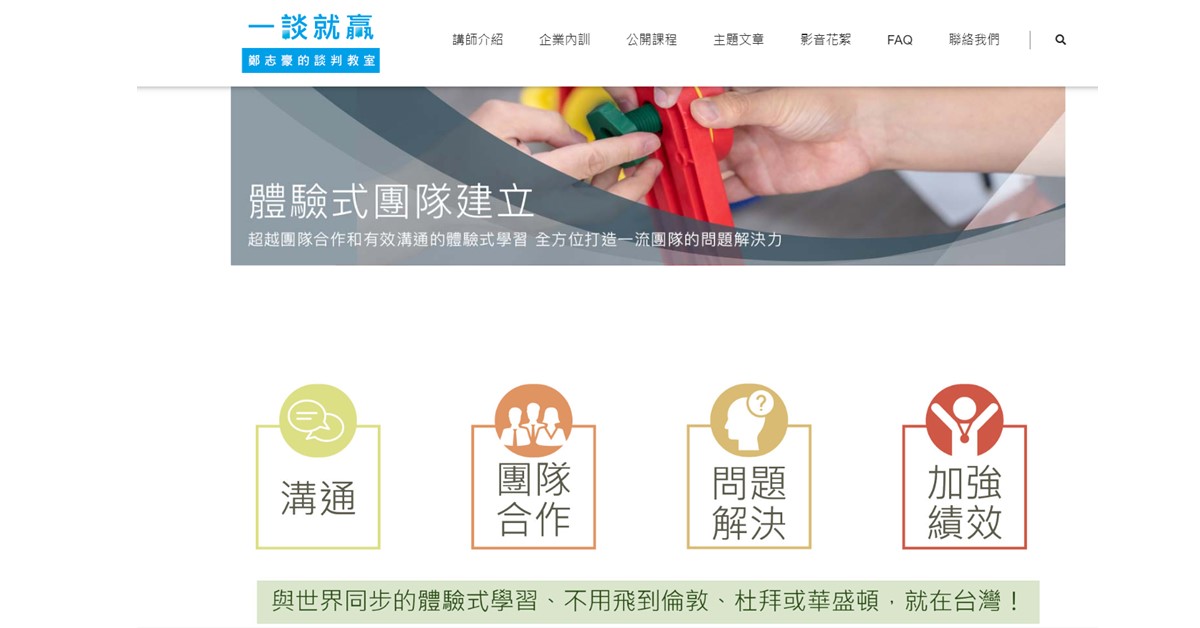
【Experiential Team Building】This method originates from MTa Learning's MTa Insights® teaching tools and methodology. Their team has received high praise for their presentations at ATD, the world's most authoritative talent development association. This is the best set of world-class experiential team building tools and activities that Alex has encountered in many years, and Alex worked hard to obtain their authorization. This MTa Insights set contains as many as 53 activities. Alex selected different activities from 【Level 1】, 【Level 2】, and 【Level 3】 to provide participants with more diverse and useful training. Link:【Experiential Team Building】
【Team Member Exchange】
【Stepping Out of Your Comfort Zone】
【Any Team Must Be Collaborative】
Since I haven't participated in club activities for a very long time, I'm basically unfamiliar with everyone else in the class (of course, I did check the participating members one by one the night before, and indeed I really didn't know almost anyone XD, but at least I tried to understand and remember everyone's expertise, experience, and even their relationships, etc.). Therefore, when I sat down in the group and saw that Michelle and Fuyu were practically the only people in the class I knew, and then learned that Teacher Alex had indeed grouped them based on familiarity, I breathed a sigh of relief. But then I immediately thought: Wait a minute, my initial intention in participating in activities should be to become someone who can make any team work successfully. I can't always work with people I know well; I should bravely step out of my comfort zone XD.
Therefore, when there was an opportunity to switch groups during the "team exchange" period, I actually tried my best to switch to a group I didn't know at all, and I did find that trading myself would benefit both my group and the other group. Although I kept trying to persuade the other group to trade me with them, for example, saying things like, "From the beginning, I told our group that I was the most suitable person to be traded, that we might get extra points if we completed the trade, and that both groups would have better hands, etc." I even convinced the other group (the Bo Ting group) to trade, but our group refused and failed, ultimately not being traded XD. Actually, our group's ranking and score would have been better after the trade, but at the time, our teammate misjudged the situation and the trade didn't happen. However, when Michelle encouraged and comforted us, saying, "It's okay, there are many more activities to come where we can work harder to earn points," I felt inexplicably touched and amused XD (I immediately saw the team leader's performance). I silently thought to myself: Then I'll try my best to win for our group!!
【Effective Communication vs. Poor Communication】
【The Devil Is in the Details】
【Practice, Practice, and More Practice】
The first activity after the team was formed, in my opinion, was actually an expanded and upgraded version of a certain activity from 【Level 1】, and all our team members had already completed 【Level 1】, meaning they should all have the basic skills and concepts. Indeed, our team got into the swing of things very quickly at the beginning, including defining the problem, analyzing the types, and establishing team order, everything was in good order. However, we missed some crucial 【details】 that we shouldn't have missed, leading to incorrect answers, and our team started to get tense and chaotic.
The team members were all talking at once, even while the team leader was giving instructions. Because my hearing isn't very good, towards the end I could only hear a jumble of sounds, which not only made it difficult to keep up, but also caused me to miss the team leader's instructions to eliminate certain components first, further slowing down the team's clarification process.
Although we managed to complete this activity by using the trial and error method (Plan B) as instructed by Rongzhao, and our team did try to find the root cause of the errors through review (and with the help of senior student Zhaoxian), the details of the misses, the failure to identify the core issues with the components, and the eventual communication breakdown all demonstrated that skills and concepts cannot be learned overnight; they require repeated practice and internalization.
【Team Building】
【What is my role?】
【What are the roles of the others?】

My team members are R-Shao, Fu-Yu, Michelle, and Rong-Zhao. During the initial self-introductions, we quickly divided the tasks according to our attributes, and R-Shao decided to be the team leader. R-Shao indeed made appropriate divisions of labor and task assignments based on everyone's initial introductions.
Although I haven't attended the advanced course, I've often heard Alex talk about the Belbin team in class, read his blog, and even read a few of their books (Belbin Management Team: Lessons from Success and Failure, the text on the left is a clickable link, the content is for those interested to refer to, doctors can check out Ch2 Apollo Syndrome: The Curse of High Intelligence XD), I know my characteristic is the [Resource Invetigator] in the interpersonal orientation. R assigned me to scout enemy positions, gather intelligence, and bring usable information back to the group to share.
Rongzhao said he has excellent operational skills and relevant work experience, so R assigned him to be an "Implementer," suitable for organizing and planning each action.
Michelle is quick-witted and capable of prioritizing complex issues and multifaceted tasks requiring decision-making, and she can adapt to changing circumstances. In my opinion, she's an excellent coordinator. R assigned her to be the group leader for the last highly complex activity.
R even more explicitly assigned and added different roles for members in each subsequent activity. For example, seeing that Fu Yu's activities later automatically timed and reminded her, R automatically added the role of "Monitor Evaluator" for her, responsible for timekeeping and time checks for each activity.
Because I'm actually a rather sarcastic and blunt person (my colleagues should be quite aware of this), and I rarely say things that affirm or encourage others (my wife Pei Pei should be quite aware of this). Therefore, after assessing the roles lacking within the team, I even told everyone that I wanted to try being a supportive and encouraging figure within the team [Team Worker (TW)].
[Is the team operating smoothly?]
[How can I make this team even better?]
[Teamwork is not just the leader's responsibility]
In the two subsequent activities after the team was established, I diligently and quickly gathered external intelligence and resources and brought them back to the team.
However, the intelligence I brought back from the first activity, although discussed with Michelle and deemed very feasible—we even came up with an improved version—was immediately rejected by a team member because she said she was better at assembling from other people's templates.
Even worse, the valuable information I brought back from the second activity was completely ignored when I reported it to another group member.
Our results for both activities were ultimately unsatisfactory. Of course, we reviewed each activity afterward to see who did what key actions that made things better or worse, including changing the reporting recipients, periodic reporting, periodic checks, minimum viable product testing, etc.
For the third activity, besides needing someone to lead, referring to other groups to identify key points, and having good physical strength, I personally apologize for my inherent disadvantages... and I especially thank Teacher Alex, his wife, and the first group for their help @_@.
Our group finally achieved the highest score in the last and most complex activity, and I even heard that the completion rate was unusually high. In my opinion, besides making corrections based on the points identified in the previous review, each of our roles was fortunate enough to maximize their abilities in the right position. This included R appointing Michelle as the group leader for a complex and highly variable activity; Rongzhao meticulously drawing and constructing the content described by Michelle verbally; Fuyu providing timely updates and checks on the assembly process to Michelle; Michelle instructing me to hide details with very little time remaining, which I quickly wrote down so that the team members could review and collaborate simultaneously; and Michelle calling me back with one minute left, boldly deciding that I should directly ask the team members to discard some details and submit the final product quickly. This was a task that required extensive division of labor, collaboration, and attention to detail to complete. In real life, don't we often encounter similar work tasks?

【Not everything can be done again】】
【When failure equals the end】
【How to do well the first time?】
But why are our final results less than ideal? I think the fatal flaw is that we didn't correct and solve the problem immediately; post-event review was always too slow.
From my own perspective as a follower, when I discover the team is engaging in blatantly wasteful, unexplained, or destructive behavior, instead of merely expecting the leader to correct it immediately or only review it afterward, if I were to proactively correct it myself without fear of conflict, would the outcome be different?
For example, if a team member and the team leader speak simultaneously, and I bravely step in to maintain order and ask the team member to be quiet, wouldn't I avoid repeatedly checking instructions with the team leader later?
For example, if there's time to quickly try out a route that other groups have successfully completed, but a team member refuses and insists on their comfortable, easy route, could I proactively ask them to quickly try it out first??
For example, if a team member ignores valuable and feasible information I bring back from outside, and then keeps failing, shouldn't I immediately ask them to report back to the team leader, or even report directly to the team leader, and request everyone to quickly discuss and evaluate whether a change in approach is needed?
When others have already surpassed the UK and reached the finish line, while we are still stubbornly sticking to our own ideas and working in isolation, am I just supposed to watch the second and third groups continue to surpass us? Although other people's methods may not be suitable for our group, when new methods don't even have a chance to be discussed and verified, could this be one of the reasons for our previous failures? Of course, we reviewed and made corrections afterward, but we didn't correct and solve the problems immediately; it was too slow.
Actually, it's not just that our scores in various activities are low; our group's total score for raising hands to answer questions is also the lowest among the four groups. Raising your hand to answer the teacher's questions earns you extra points, and when we were falling behind, my senior, Fuyu, and I kept raising our hands to answer, trying to catch up and close the gap. But at the same time, I was also looking at my group members who weren't raising their hands much, silently thinking: Raising your hand to answer a question won't deduct points even if you answer incorrectly, isn't this the most cost-effective and loss-free way to gain points? Or are we all really that shy about raising our hands to speak? If I reminded my group members about this right now, would they also raise their hands to try and gain points with me?
I mistakenly thought that as a follower, as long as I fulfilled the duties of the role assigned to me by the leader, that was all I had to do, whether the team accepted it or not. But isn't it true that if I had just taken one more step at the crucial moment, the outcome would have been vastly different? Even later in the activity, I felt that what our team lacked most for success wasn't the warm-hearted teamworker (TW), but rather a strong analytical and judgmental person who dared to speak frankly and insist on raising and upholding dissent (ME). Should I try to take on the role of "ME" to help the team?
So why didn't I try in the present moment? Why did I just say, "Okay, whatever"? Because even if I wanted to give it my all, deep down I knew it was just a training activity, and I could review it later. I didn't want to take responsibility for failure, and I was afraid of conflict. So I just watched things unfold, thinking that success would be best, and failure wouldn't be my fault; I could just review it later.
But like the story the teacher told me about pushing oil drums in the army, if I came to real life and found that every situation was a life-or-death matter, and the team would be doomed if they failed, would I still make the same "Okay, whatever" decision? I think the answer is definitely no. Yet, I couldn't help but regret it. Since this was a training activity, there was room for experimentation. Why didn't I try to take an extra step at the crucial moment, instead of constantly reviewing and correcting afterward? Even if I made mistakes in the training activity, it wouldn't matter much. But in real life, will there be so much time and space to experiment...?

【Experiential Team Building】
【MTa Level 2 VS Level 1】
Having participated in both 【Experiential Team Building】Level 1 and 【Level 2】, although the two courses used the same teaching materials, the different activities presented different focuses.
The activities and content of 【Level 1】 mainly focused on how to find the root cause of errors and define the core problem through review, then analyze technical and non-technical issues, and finally improve and correct to solve the problem. Furthermore, in each activity, I learned how to develop plans and backups under time pressure, understand the importance of communication and feedback, and set checkpoints for quick review and correction.
The activities in [Level 2], in addition to the effective and ineffective communication aspects of [Level 1] and other content, taught me to analyze and understand the role and influence of each team member in team building, conduct a competency assessment, and through review, identify the roles, actions, and events that enable the team to function smoothly, and examine what actions I and others could take to make teamwork smoother.

【Afterword】
【The Perfect Team? The Perfect Leader?】
【Who is the MVP in the Team?】
In the MTa Level 2 course, I realized the importance not only of the **leader**, but also of the **followers** in every action of team building and collaboration, and the importance of review and correction. Sometimes, the **followers'** attitude is even more crucial to success or failure. Instead of writing tons of notes in class, it's better to grasp real-life teamwork experiences and constantly reflect on what you did right and wrong, what you could have done more of or less of.
Furthermore, besides trying to see things from the **leader's** perspective, it's also helpful to identify the missing roles in your team and fill those gaps. Don't expect to encounter a perfect team or a perfect leader. The success or failure of a team is not solely the leader's responsibility. Instead, think about what role you can play in the team to make it stronger and go further because of you. That's when you become the MVP (Most Valuable Player).
This page is for medical education and academic communication. It does not replace individual diagnosis or treatment advice.
Continue reading this category →